Home / FAQ
Cosmetic Tattoo Course FAQ
The questions worth settling before you pick a technique, send an enquiry or buy a single tool. They’re grouped in the order you’ll meet them, from choosing a course to working after it.
In this FAQ
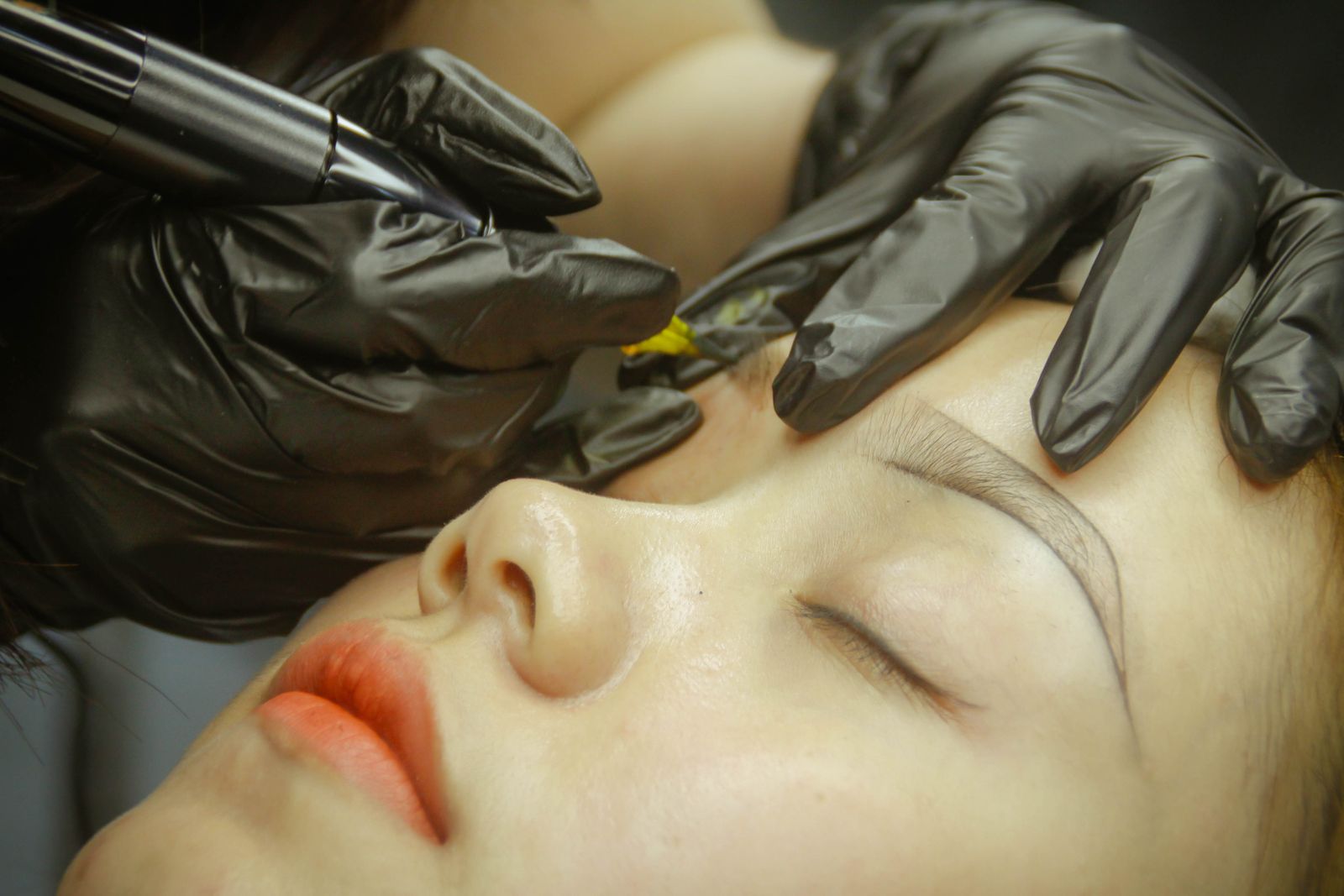
Reference photograph: a pen working close to the brow. Every question here comes back to the steadiness behind a moment like this.
01
Choosing a course
Where should a complete beginner start?
Most people start with the Cosmetic Tattoo Course. It covers the discipline as a whole, so you learn how skin, pigment and design work together before you pick a specialty. For the wider picture, read How to Become a Cosmetic Tattoo Artist in Australia.
What separates microblading from powder and ombre brows?
Microblading builds fine, hair-like strokes by hand. Powder and ombre brows build soft, shaded density instead. Each look suits different clients and a different kind of hand control. Compare the Microblading Course with the Powder & Ombre Brows Course, or look at the Eyebrow Tattoo Course if brows as a whole are your focus.
Can I train in lips, eyeliner, fine line or removal?
Each area has its own course page: the Lip Tattoo Course, Eyeliner Tattoo Course, Fine Line Tattoo Course and Tattoo Removal Course. Eyeliner work sits very close to the eye, so it asks for particular precision. Removal is a separate skill set from placing pigment.
How do I compare one course with another?
Ask who teaches, how much hands-on practice you get and what support there is after the course. Our checklist in How to Choose a Cosmetic Tattoo Course sets out the questions in order. You can also browse every option on the courses hub.
02
Before enrolling
Prices, dates, durations and what you receive at the end can differ from course to course. Ask for the current details of the exact course you want. Don’t rely on a general figure.
How much does a course cost?
That depends on the course. Send an enquiry naming the course you’re interested in, and ask what the fee includes as well as the fee itself.
How long is training, and when does it run?
Duration and dates are set per course, so we confirm them when you enquire. Keep your own availability in mind, because time for practice between sessions matters as much as class time.
Do I need beauty experience first?
A foundation course suits newcomers. A specialist course may suit people who already work in beauty. Tell us your background when you enquire so we can point you to the right starting place.
Will I receive a certificate?
Ask exactly what paperwork comes with the course you choose and what it covers. Knowing what a document does and doesn’t mean is part of choosing well, wherever you train.
Should I buy equipment before I start?
Wait until you know which course you’re taking and what it provides. Cosmetic Tattoo Equipment: A Beginner’s Overview explains what each tool is for, so you can ask good questions first.
Where does training take place?
Our training is based in Melbourne. See Cosmetic Tattoo Courses in Melbourne, and ask about venue details when you enquire.

Reference photograph: fine tools and a pigment cup, the materials a trainee learns to handle cleanly.
03
During training
What does hands-on training usually involve?
Cosmetic tattoo training usually mixes theory, demonstration and supervised practice. You learn mapping, pigment choice and skin behaviour, then repeat strokes or shading on practice skin until your hand is steady. Cosmetic Tattoo Training: What to Expect goes into more detail.
Will I work on live models?
How each course is structured, including any work on models, is something to confirm for that course. Ask about it when you enquire.
How much attention goes to hygiene?
A lot. Gloves, barriers, single-use items and a clean workstation are part of every procedure. You should practise them as habits, not treat them as a separate topic.
How can I get the most from each session?
Arrive prepared, keep a sketchbook, photograph your practice work and write down feedback. Study Tips for Cosmetic Tattoo Students explains each habit.
Technique guides
After training
Can I start taking clients straight away?
Finishing a course is only one step. Before you take paying clients, check the registration, health and insurance requirements that apply where you plan to work. Your local council is a good place to start.
What career paths open up?
Some graduates add brows to a salon menu they already run. Others join a studio or specialise in one area of the face. Cosmetic Tattoo Career Paths sets out what each route asks of you.
Where can I see trainers and student work?
Trainer profiles are on Our Cosmetic Tattoo Trainers, each linked to the courses they teach. The Student Work Gallery shows genuine student work as it is added, with each piece linked back to its course.
04
Keep practising after the course ends. Photograph your practice sheets over time, and you’ll see how your control has improved.
Still weighing it up?
If your question isn’t here, ask it directly. Use the enquiry page for questions about a particular course, or contact us about anything else. These guides may help in the meantime.