Home / Education & Resources / Lip Tattoo Training
Lip Tattoo Training: Blush, Outline and Colour
Lips are the least forgiving canvas in cosmetic tattoo. The border moves when a client speaks, the skin is thin, and the natural colour underneath changes every pigment you place. This guide sets out what lip tattoo and lip blush training should cover before you ever work on a client.
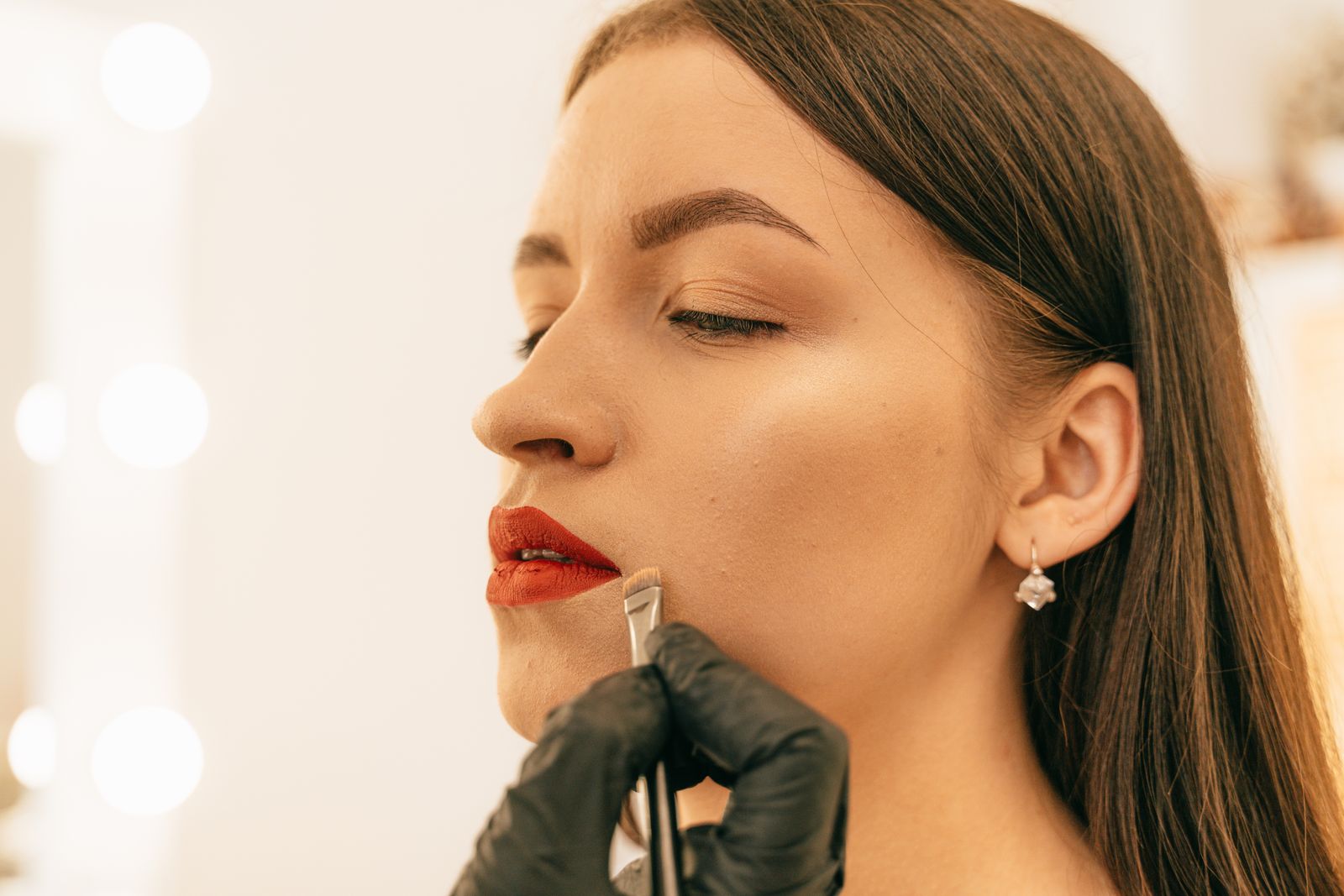
Reference photograph: colour applied to the lip with a fine applicator. The border and the hand position come first.
What this guide covers
Taught in full on the Lip Tattoo Course page.
01
Mapping the outline before any colour
Lip training starts with drawing, not pigment. Students learn to read the whole mouth at rest: the height of the Cupid’s bow, the width of each corner, how the upper and lower lip balance, and where one side sits differently from the other. Very few mouths are symmetrical, and the aim is a shape that suits the face rather than a template pressed onto it.
Expect repeated mapping exercises on paper and practice skin. You mark the centre line, the peaks and the corners, then check them from the front, from each side and with the mouth relaxed. You also learn when not to move the border: going too far past the natural edge is one of the easiest ways to make a lip look unnatural.
If you haven’t mapped a brow before, the foundation Cosmetic Tattoo Course covers the drawing and measuring habits that lip work relies on.
02
Colour theory against natural lip tones
A pigment never heals exactly as it looks in the cup. It sits over the client’s own lip colour, so training focuses on how the two combine. Lip blush, a soft wash of colour, and a more defined outline and fill both depend on this judgement.
Topics a course should work through
Reading undertone. Telling cool, warm and neutral lips apart in daylight, not under a ring light alone.
Darker and uneven lips. Why some lips need colour correction first, and why bright pinks can shift on deeper natural tones.
Mixing and choosing shades. Building a colour that suits the client’s wishes and what their lip will realistically hold.
Setting expectations. Explaining in plain words how fresh colour differs from healed colour.
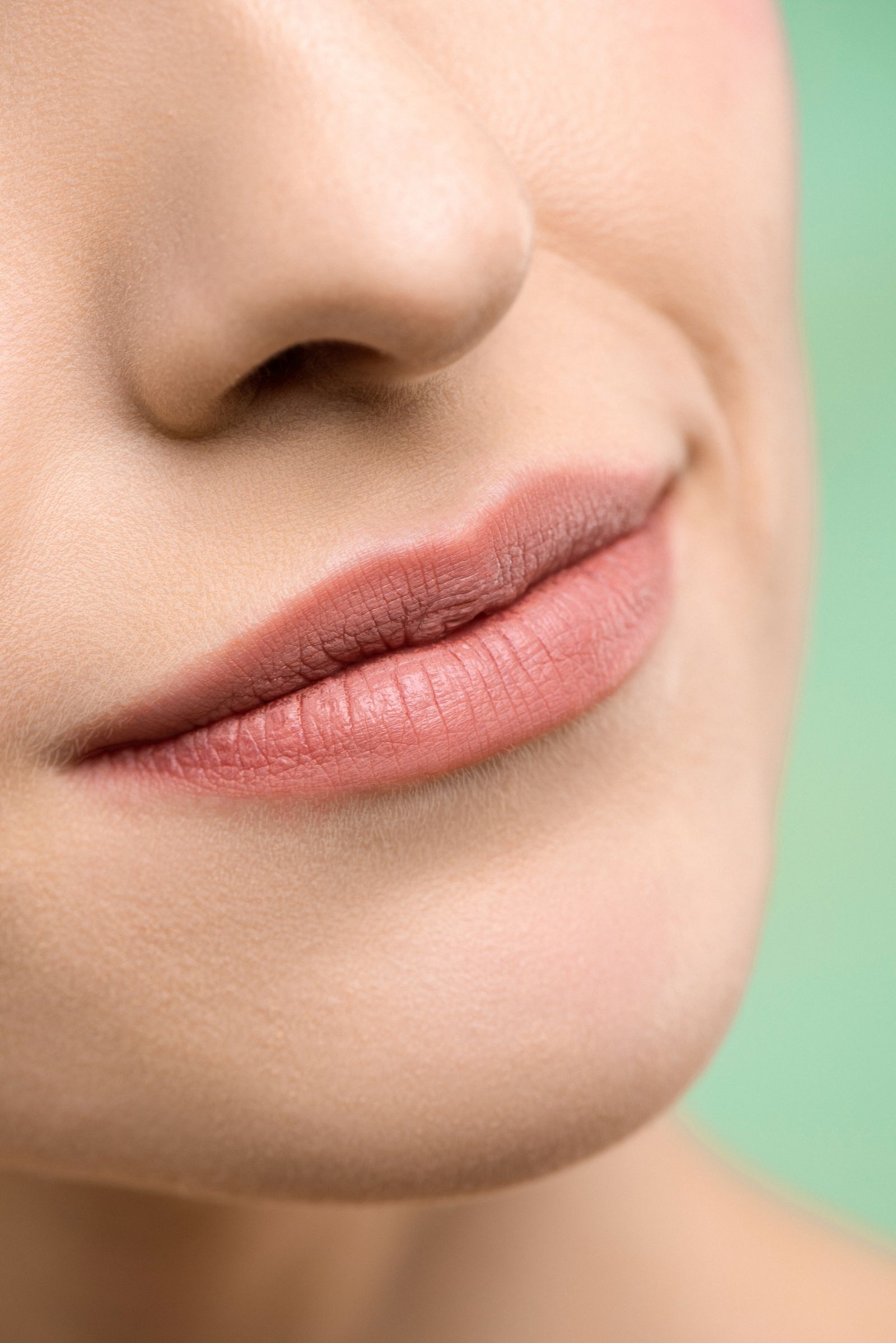
Reference photograph: a natural lip tone. This is the base every pigment choice must account for.
03
Client comfort and aftercare education
Before the appointment
Lips are sensitive, so good training covers a careful consultation. You learn which health history questions matter for lip work, such as a history of cold sores, when to ask a client to speak to their doctor first, and which comfort measures are allowed where you practise.
During the procedure
Students practise stretching the skin with a light hand, working in short passes, and checking in with the client without breaking their focus. A steady, calm pace is part of the technique, not an extra.
After the client leaves
Healing lips change a lot in colour and texture. Training should show you how to explain aftercare clearly, both in person and in writing, so the client knows what is normal, what to avoid and when to get back in touch.
Tools and hygiene set-up for lip work are covered in Cosmetic Tattoo Equipment: A Beginner’s Overview.
Also working close to sensitive skin: Eyeliner Tattoo Training: Precision Around the Eye.
Before you enquire about a lip course
Take these questions with you. For a wider framework, read How to Choose a Cosmetic Tattoo Course.
Does the course teach mapping on paper and practice skin before any live work?
How much time goes on colour theory for different natural lip tones?
Are both lip blush and defined outline techniques covered?
How are consultation, client comfort and aftercare taught?
Who is the trainer? See Our Cosmetic Tattoo Trainers.
Ready to ask about places? Send an enrolment enquiry or contact the academy.