Course 07 of 08
Fine Line Tattoo Course
Fine line work leaves no room to hide. One wobble, one overworked pass, and a delicate design loses its shape. This course is about control: steady single-needle lines, even line weight and small designs that still read clearly on skin.
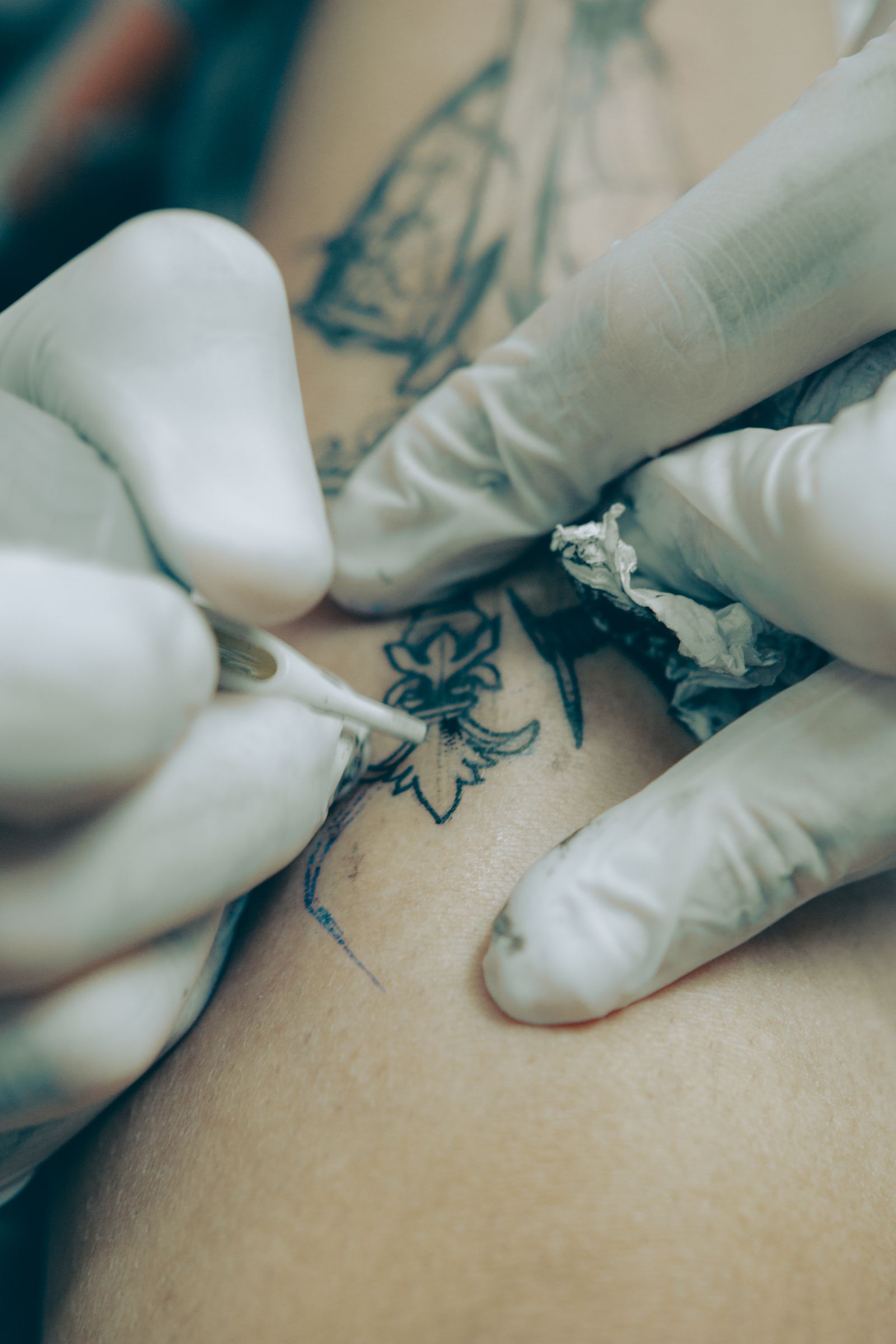
Reference photograph: the machine follows an outline that was planned before the first line went in.
Is fine line the right course for you?
✓ You enjoy precise, patient drawing and can work slowly.
✓ You want to build delicate linework, not bold fill or shading.
✓ You already work in beauty or tattooing and want to add fine line work, or you are starting out and want line control first.
✓ You are ready to practise on practice skin until your lines are consistent.
✓ You have read the guide to choosing a course and want to compare it with the other options.
01
Overview
The Fine Line Tattoo Course teaches the discipline behind small, delicate tattoos. Much of the time goes into the hand rather than the design: how to hold the machine steady, how fast to move, how deep to work, and how to keep one line the same weight from start to finish.
Once your line control holds up, the course moves on to scale. You learn how to simplify a design so it reads clearly at a small size, and how spacing between lines affects how the finished piece looks on skin.
New to skin and pigment? The Cosmetic Tattoo Course covers the foundations. If precise lines around the eye interest you, read the Eyeliner Tattoo Course too.
02
Techniques covered
Single-needle linework
Hand position, machine angle and working speed for thin, clean lines that heal crisp instead of blurring.
Line consistency
Keeping the same weight through curves, joins and long strokes, and learning to spot overworking before it builds up.
Small-scale design and drills
Design sessions on simplifying artwork and spacing lines well, then practice-skin drills: straight lines, circles, curves, then full motifs.
03
Course structure and format
The course builds up in stages. It starts with theory: hygiene, skin and how needle depth affects a fine line. Next comes drawing and design on paper, then supervised drills on practice skin. Each stage depends on the one before, so you only move on when your lines are steady.
Duration
Dates and course length are confirmed when you send an enquiry.
What students learn
How to prepare a clean workstation, plan and transfer a small design, control line weight, check your own practice work honestly and decide which designs work at a fine scale.
What is included
Format, venue and inclusions are confirmed when you enquire. The equipment guide explains the main tools before you start.
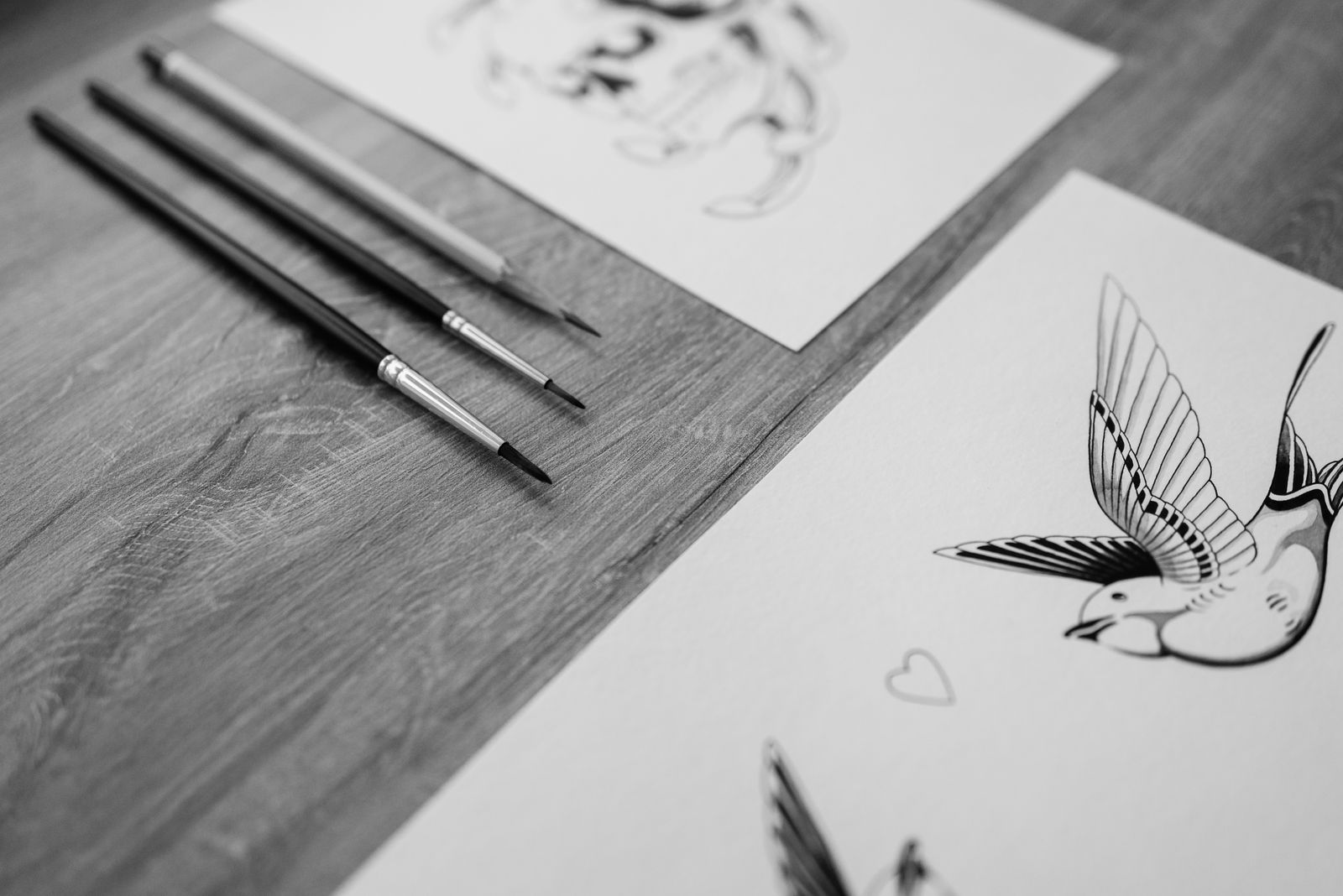
Reference photograph: design sheets drawn before any work on skin.
On paper: if a line wobbles in pencil, it will wobble in the skin. Design drills come first.
On depth: fine lines depend on consistent depth. Go too shallow and the line fades; go too deep and it spreads.
On scale: fine lines placed too close together can blur into each other over time, so simple designs are safer.
Trainer
Fine line training is taught by trainers whose experience and expertise are set out on their own profiles. Read about who teaches each course before you enquire.
Student work
The gallery shows genuine student pieces, each labelled with the course it relates to. Look at the linework closely: that is the best way to see what the training is aiming for.
04
Questions
Do I need drawing experience?
It helps, but patience matters more. Design drills are part of the course, and steady drawing improves with repetition.
How is fine line different from microblading?
Both depend on fine strokes. Fine line work uses a machine to create small designs, while microblading uses a hand tool to draw hair strokes in the brow.
Where can I ask about dates and enrolment?
Use the enquiry page. For anything else, contact the academy. More answers are on the FAQ page.