Tattoo Removal Course
Every other course in this prospectus teaches you to place pigment. This one teaches the reverse: how removal works, how to judge whether a client and a tattoo are suitable, and how to guide someone safely through care between sessions.
Removal suits artists who already understand pigment in skin. If you are new to the field, the Cosmetic Tattoo Course is the usual place to begin.
01
How removal works, and who the course is for
In general terms, tattoo removal breaks down or lifts pigment that sits in the skin so the body can clear it gradually. Different methods reach that goal in different ways, and none of them works the same on every tattoo. Ink colour, depth, age, the area of the body and the client’s skin all shape what is realistic.
The course is written for cosmetic tattoo artists who want to correct faded, migrated or unwanted brow, lip and liner work, and for beauty professionals adding removal knowledge to an existing practice. You learn to explain the process plainly, set honest expectations and recognise when a referral is the better answer.
Rules for removal equipment differ between Australian states. Check the requirements that apply where you plan to work before offering treatments.
02
Techniques covered
Client assessment and suitability
Taking a thorough history, reading skin type and condition, looking at how the tattoo was applied, and knowing the contraindications that mean a treatment should wait or not go ahead.
Pigment and skin
Why some colours and some cosmetic pigments respond differently, how depth affects removal, and why spacing between sessions matters for the skin.
Safety, hygiene and aftercare education
Setting up a clean workstation, protecting yourself and the client, and writing clear aftercare guidance that clients can follow at home between appointments.
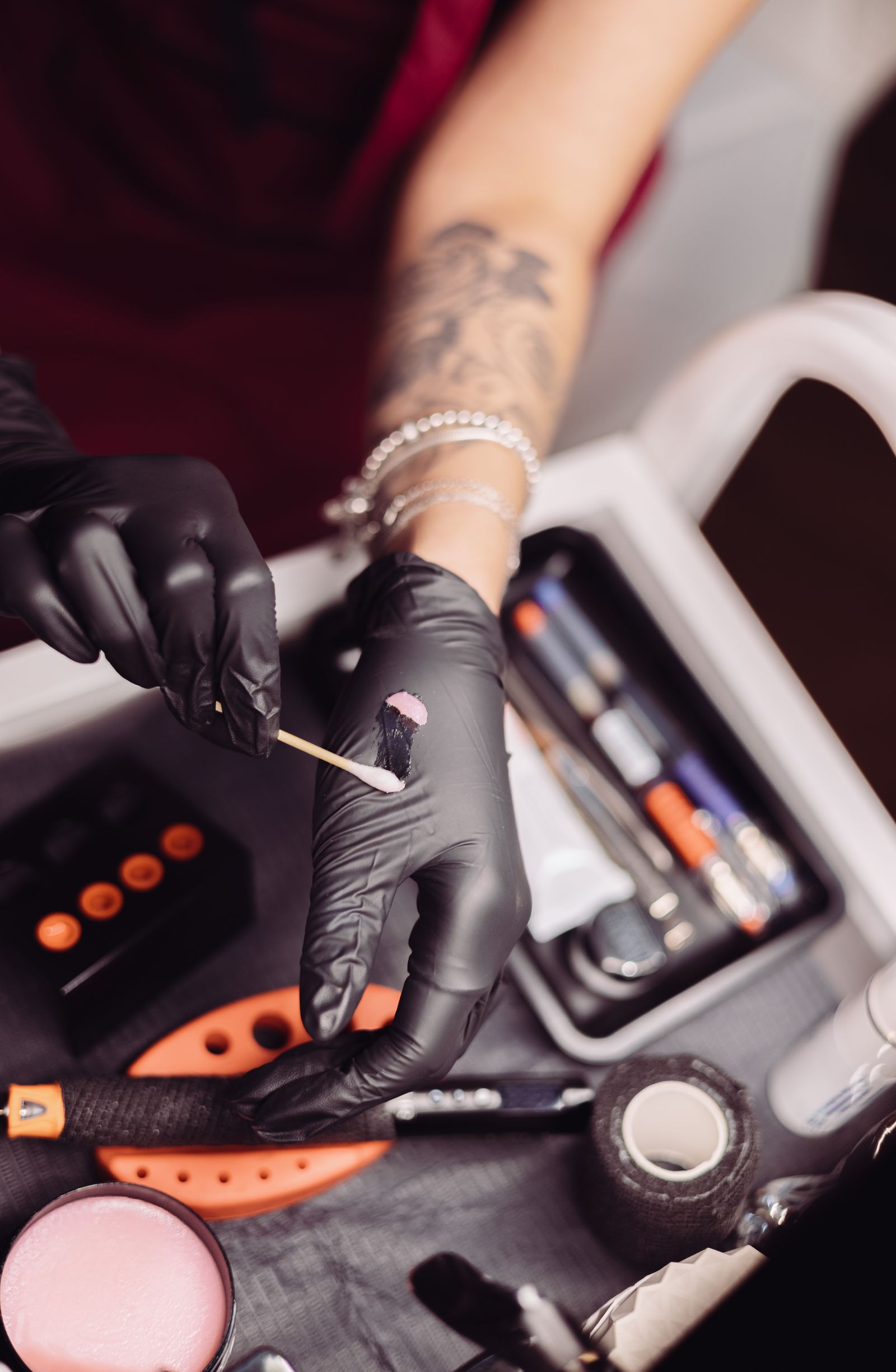
Reference photograph: knowing the pigment that was used is part of every removal assessment.
03
Course structure and what students learn
Theory. Skin structure, how pigment settles, and the general principles behind removal methods.
Consultation. Assessment, suitability, consent and setting realistic expectations with the client.
Practice set-up. Hygiene, protection and a safe workstation from start to finish.
Aftercare. Guidance between sessions and recognising when a client should see a medical professional.

Reference photograph of brow work at close range. On this course, looking closely at the existing work and assessing the client comes before any treatment.
Duration, training format and what is included are set out for you when you send an enquiry.
Your trainer
Trainer profiles list verified experience and expertise only, along with the courses each trainer teaches.
Student work
The gallery shows genuine student work, with each piece linked back to the course it relates to.
Questions about the Tattoo Removal Course
Do I need cosmetic tattoo experience first?
It helps to understand how pigment is placed before learning how it is removed. Mention your background when you enquire and we can talk through where to start.
Can removal fully clear every tattoo?
No method can promise that. The course teaches you to assess each case and explain likely outcomes honestly before any treatment.
Where can removal skills lead?
Read Cosmetic Tattoo Career Paths for the roles and practice types where removal knowledge fits, or see the full course FAQ.
Ready to learn the reverse side of the craft?
Send an enquiry about the Tattoo Removal Course, or contact us with a general question.