Home / Education & Resources / Cosmetic Tattoo Training
A student guide from the Education & Resources folio
Cosmetic Tattoo Training: What to Expect
Good cosmetic tattoo training is not a single demonstration followed by a client. It moves in stages: theory about skin, pigment and hygiene, then watching a trainer work, then practising under supervision, and all the while learning how to consult with a real person in the chair. This guide explains each stage so you can walk into an enquiry knowing what to ask.
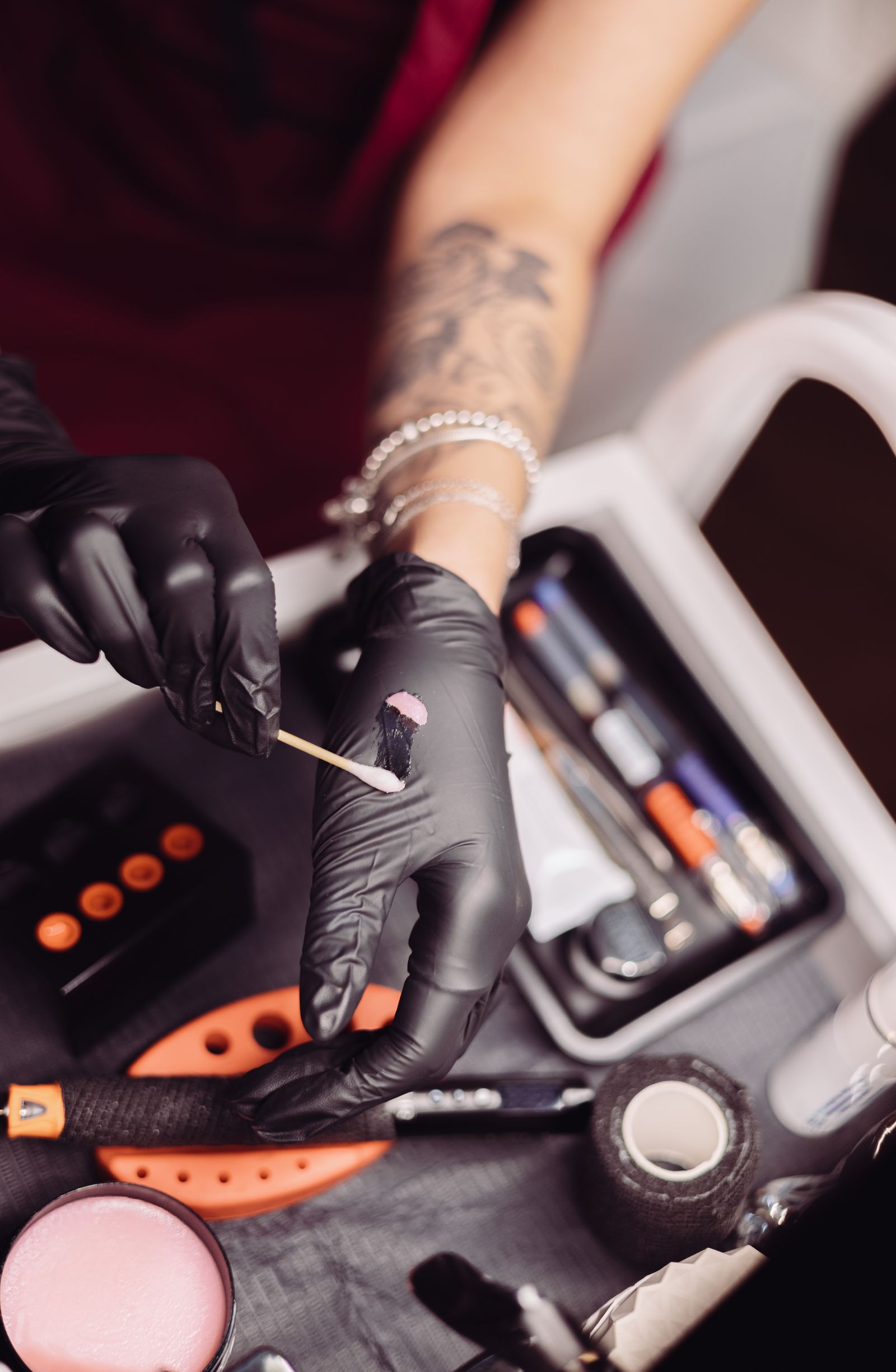
Reference photograph: pigment is tested and prepared before any work on skin.
Before your first day
A short practical checklist for anyone preparing to start training.
— Decide which area draws you first: brows, lips, eyes or the whole discipline.
— Practise drawing brow shapes and even lines on paper. Steady hands help from day one.
— Check the licensing and skin penetration rules that apply where you plan to work.
— Bring a notebook. Consultation notes and pigment observations are worth keeping.
— Write down your questions for the academy before you send an enquiry.
01
The four parts of training
Most cosmetic tattoo training weaves these four strands together rather than treating them as separate lessons. Each one supports the next.
i.
Theory
Skin structure and depth, how pigment behaves as it heals, colour choice for different undertones, and infection control. Hygiene is not a side topic: it shapes how every station is set up.
ii.
Demonstration
Watching a trainer map, stretch the skin and place pigment shows what theory cannot: hand position, pace, and the small decisions made between passes. Ask questions while you watch.
iii.
Supervised practice
Practice usually begins on synthetic skin, where strokes and shading can be repeated and corrected. Work on live models, where offered, happens with a trainer beside you.
iv.
Consultation
Listening to what a client wants, checking suitability, explaining healing and aftercare, and recording consent. A calm consultation often matters as much as the tattoo itself.
02
Questions to ask before enrolling
How is time split between theory and practice? You want enough hands-on work to build control, not only slides.
What do students practise on, and when? Ask how progress moves from synthetic skin to supervised model work.
Who teaches, and what is their background? Read the trainer profiles and ask about anything not covered.
What is included, and what do I need to buy? Kits, pigments and tools vary between courses.
What support is there after the course? Questions often come up once you start working on your own.
Can I see work made during training? The Student Work gallery is a good starting point.
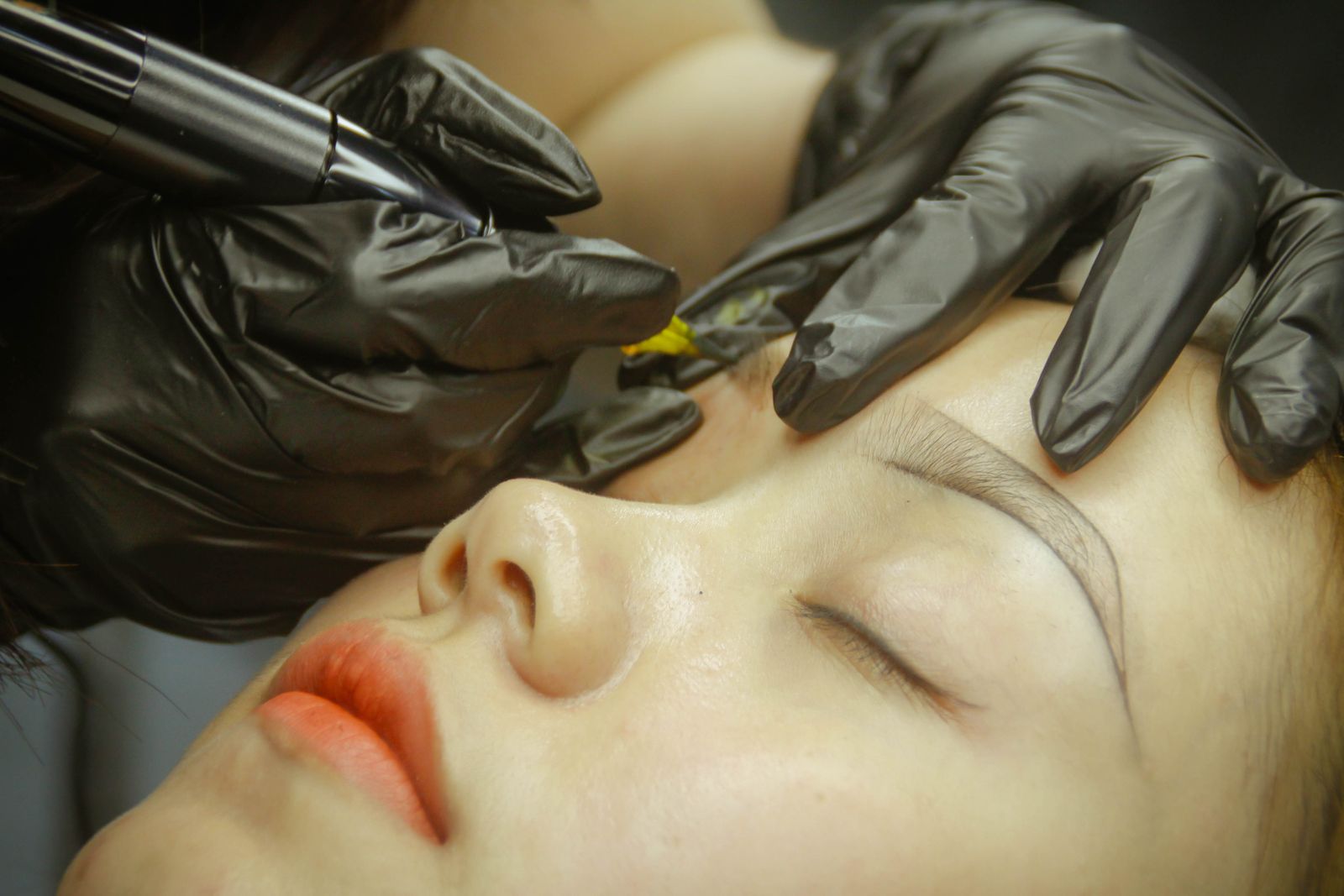
Reference photograph: brow work with a cosmetic tattoo pen.
New to the field? The Cosmetic Tattoo Course covers the discipline as a whole. If brows are your focus, start with the Eyebrow Tattoo Course.
03
Related reading
How to Become a Cosmetic Tattoo Artist in Australia — the wider path into the profession
How to Choose a Cosmetic Tattoo Course — comparing course areas
Cosmetic Tattoo Equipment: A Beginner’s Overview — tools, needles and pigments
Study Tips for Cosmetic Tattoo Students — getting the most from practice
Ready to ask your questions? Enquire about a course, or contact the academy for anything else.