Home / Education & Resources / Career Guides
Cosmetic Tattoo Career Paths
Finishing a course is where the real decisions start. Some graduates add brows to a salon menu they already run, some join a studio, and others narrow in on one area of the face or on removal. This guide sets out those paths plainly, with what each one asks of you, so you can plan your training around the work you actually want to do.
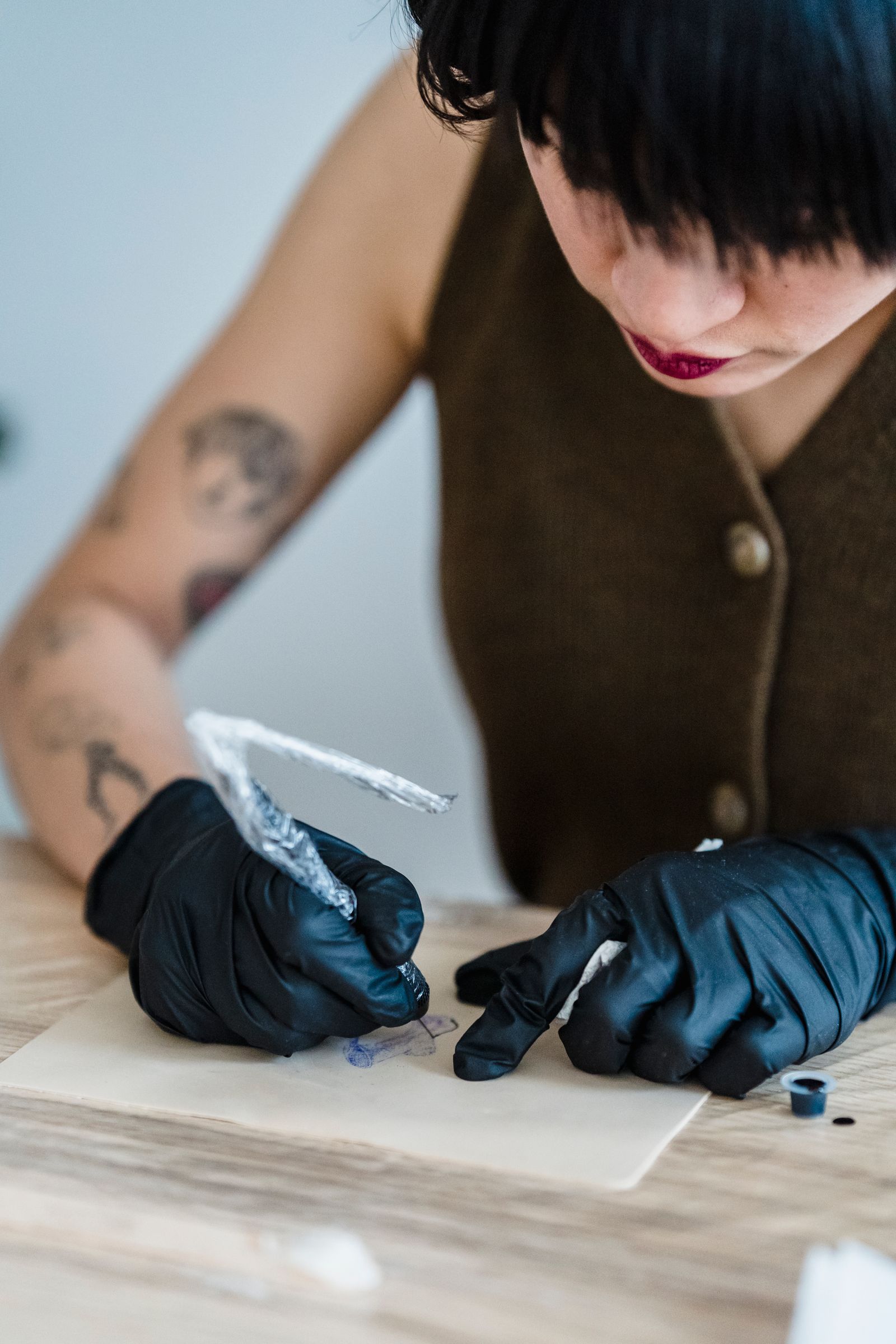
Reference photograph: a gloved artist working with a machine. Studio work asks for this kind of steady hand and clean setup from the first appointment.
Before you pick a path
Answer these honestly first. They shape which route suits you better than any trend will.
☐ Do you already have clients, a room or a salon?
☐ Would you rather work alongside experienced artists or on your own?
☐ Which area holds your attention: brows, lips, eyes or removal?
☐ How much supervised practice can you fit in after the course?
☐ Have you checked local council and state requirements for skin penetration work where you plan to practise?
01
Two common starting routes
Adding services to an existing beauty business
If you already offer brow shaping, tinting, lash work or skin treatments, cosmetic tattoo can sit naturally beside them. Your existing clients know you, and a brow consultation grows out of conversations you already have. The trade-off is time: semi-permanent work needs longer appointments, a clean procedure setup and follow-up visits, so plan how it fits your week. A broad foundation such as the Cosmetic Tattoo Course gives you the grounding before you commit to one technique.
Working in a studio
Joining an established studio puts you near artists with more hours behind them. You see how consultations are handled, how difficult skin is assessed and how touch-ups are managed. Studios look closely at hand control and hygiene habits, so arrive with clean practice work and an understanding of which techniques you can already perform with confidence.
02
Specialising in one area
Many artists build a name on a single area. Specialising lets you repeat the same decisions until they become reliable.
Brows
The most familiar route. It covers mapping, hair strokes and shading. Compare the Microblading Course with the Powder & Ombre Brows Course to see which method suits your hand.
Lips
Lip work rewards an eye for colour and patience with a moving border. The Lip Tattoo Course sets out blush and outline work.
Removal
Removal is a different discipline: you take pigment out rather than put it in, often correcting older work. Read the Tattoo Removal Course page before you decide.
03
Building a portfolio
Whichever path you choose, your portfolio does the talking. Start with practice skin and keep it: dated sheets show how your strokes and shading have improved. When you move on to live models, photograph in the same light, from the same angles, before and straight after the procedure, and again once healed if the client agrees.
Only show your own work, and ask for written permission before you publish a face. A small portfolio of consistent, honest results carries more weight than a large one padded with borrowed images. Group it by technique so a studio or client can find what they came to see.
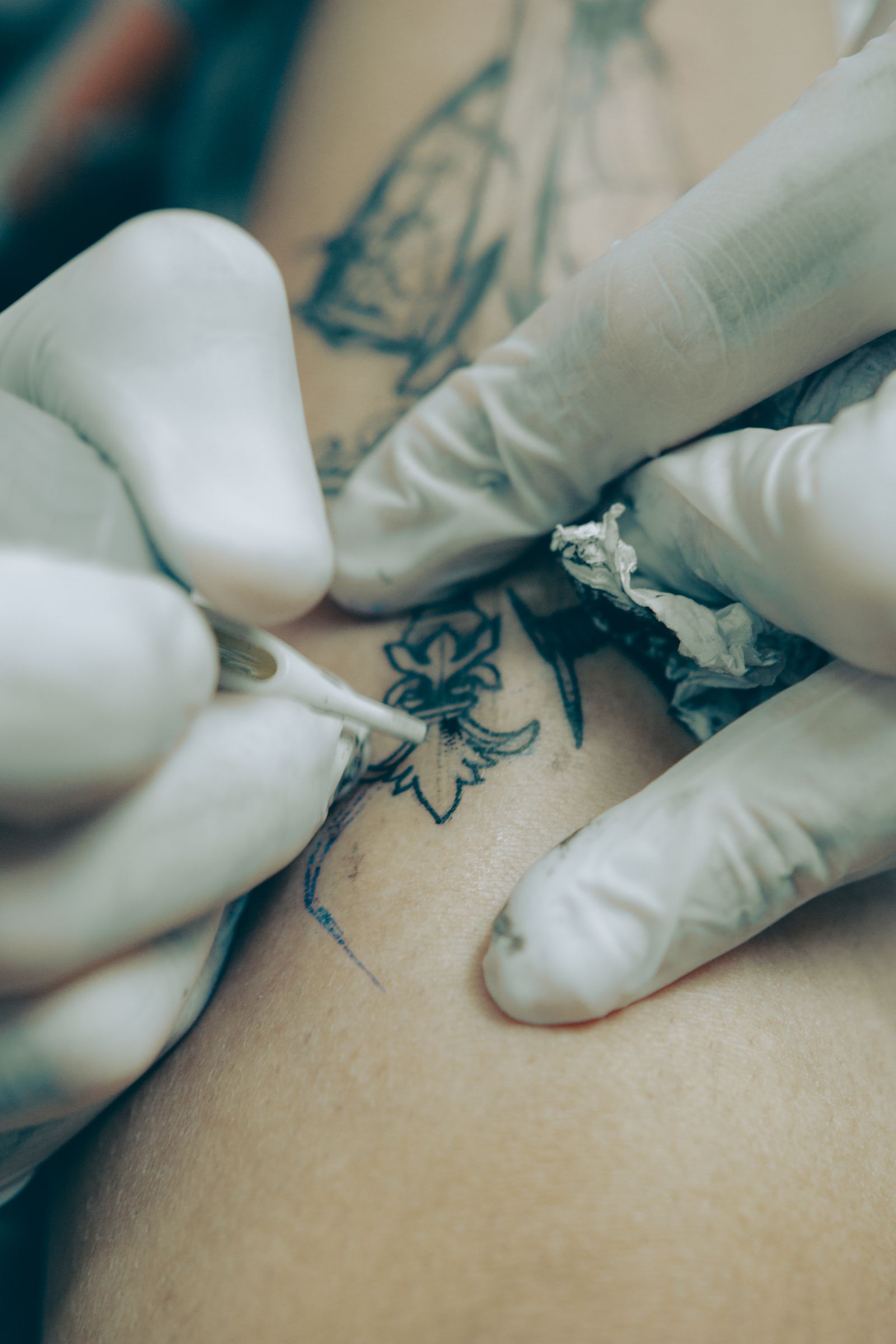
Reference photograph: a machine following an outline. Record your own work in the same steady, well-lit way.
Plan the training behind the path
Look through the full course contents and match them to the route you want. If you’re unsure which course suits your plans, send an enquiry or reach us through the contact page.