Home / Education & Resources / Eyeliner Training
Eyeliner Tattoo Training: Precision Around the Eye
Eyeliner tattoo is worked millimetres from the eye itself, on skin that is thin, mobile and quick to react. Learning it well is less about bold lines and more about steady hands, clean habits and an honest consultation. This guide explains what that training should cover.
What this guide covers
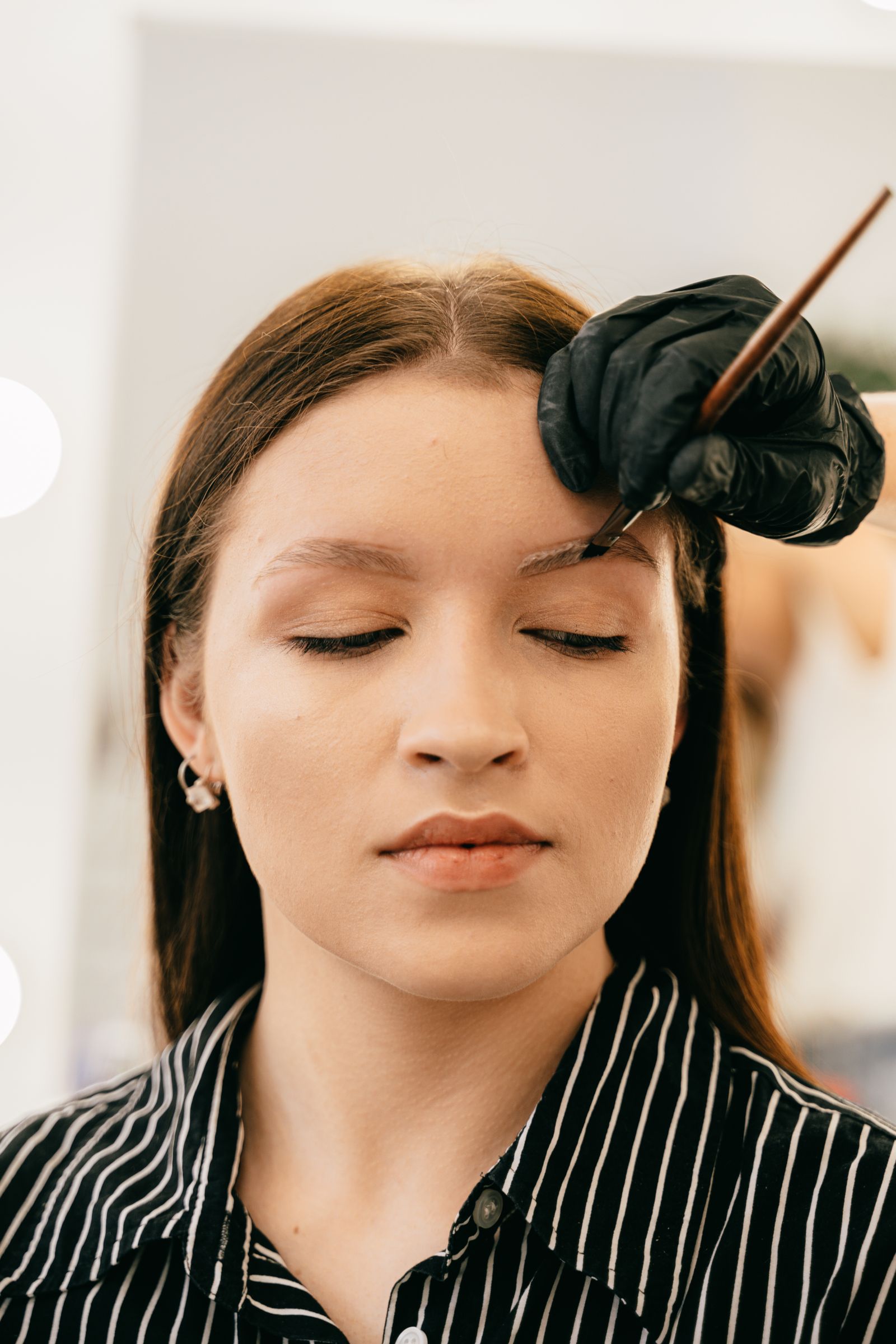
Reference photograph: a gloved practitioner works with a fine tool close to the brow, just above the eye, while the client keeps her eyes closed. Close work around the eye area depends on stillness from both people.
01
Lash enhancement or winged liner
Most eyeliner tattoo work sits somewhere between two looks. A lash enhancement places pigment tightly along the lash line so the lashes appear fuller, with no visible line when the eye is open. A winged or defined liner is thicker and extends past the outer corner, reading clearly as make-up.
Training usually begins with the subtle end. Lash enhancement teaches you to follow the lash line accurately and keep depth consistent. Defined styles add design decisions: how far a tail can extend, how it sits against hooded or mature lids, and how it will look when the client blinks or smiles.
Margin note: sketch both styles on paper and practice skin long before a live eye. A wing that looks elegant flat can sit very differently on a lid that folds.
02
Working carefully around the eye
Skin that moves.
Eyelid skin is among the thinnest on the face. Students learn how to stretch it gently and evenly without distorting the line they are following.
Controlled hand position.
Anchoring your working hand and resting your wrist keeps the needle steady if the client flinches or tears up.
Light, layered passes.
Building pigment gradually is gentler on delicate skin than forcing colour in one heavy pass, and it gives you more control over the finished line.
Knowing when to stop.
Excess watering, sensitivity or a client who cannot stay still are reasons to pause. Good training treats that judgement as a skill, not a failure.
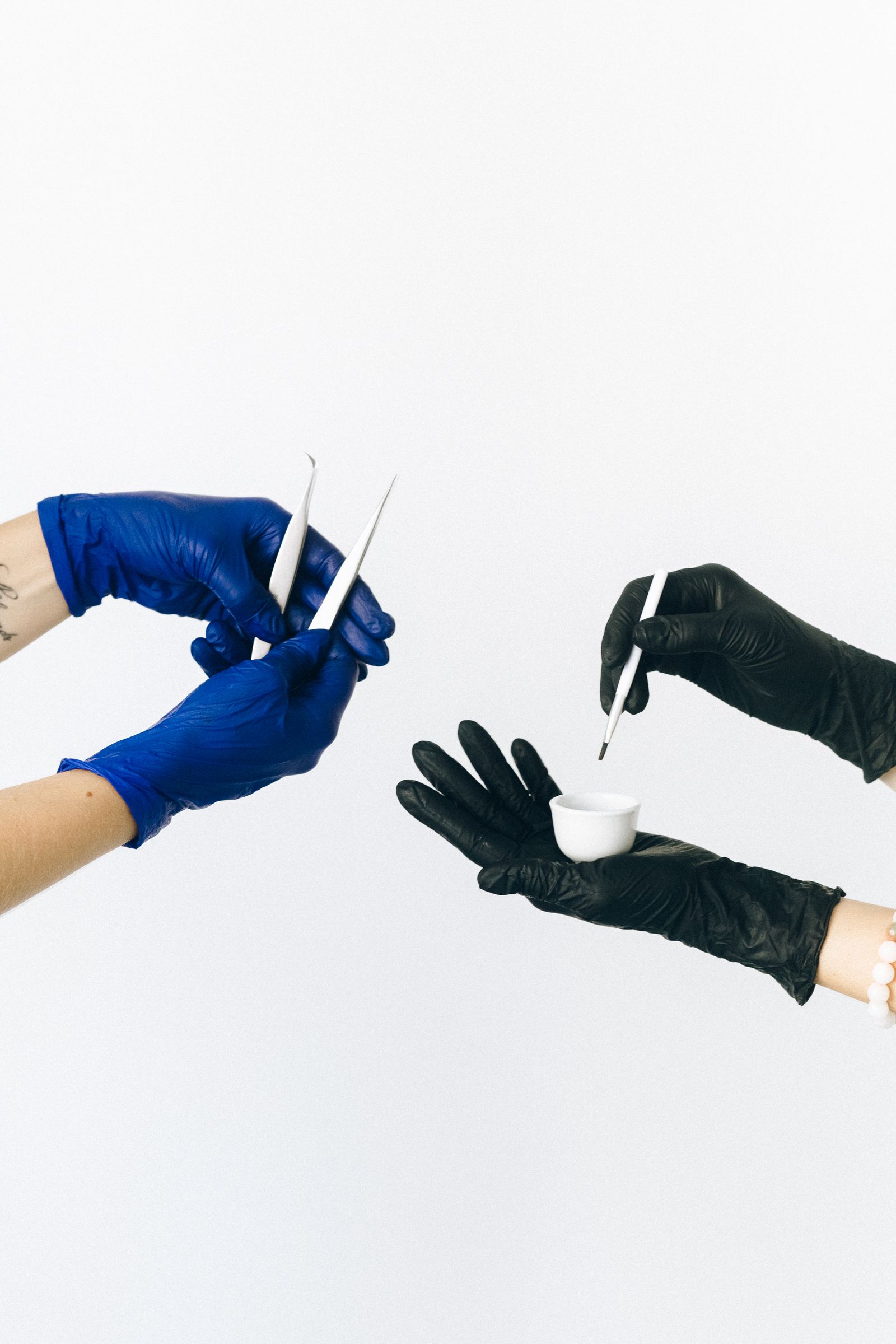
Reference photograph: gloved hands, fine tools and a single pigment cup.
03
A hygiene focus from the first lesson
Because the eye is so sensitive, clean practice cannot be an afterthought. Expect training to cover hand hygiene and glove changes, single-use needles and cartridges, how to set up and clear a workstation, and how to avoid cross-contamination between pigment, tools and skin.
Aftercare belongs here too. Students should be able to explain healing clearly to a client and recognise when a concern needs medical advice rather than a touch-up. Registration and premises requirements are set locally, so check what applies to you in Victoria before you work on clients.
04
Consultation questions to practise
A careful consultation protects the client and the artist. These are the kinds of questions an eyeliner student should be comfortable asking before any procedure is booked.
i. Do you wear contact lenses, and can you remove them for the appointment?
ii. Have you had recent eye surgery, lash extensions, lash lifts or eye conditions?
iii. Are you using any lash growth serums or medications that affect skin or healing?
iv. Would you like the lashes to look fuller, or a line that reads as liner?
v. Do you understand the healing stages and the aftercare involved?
Ready to learn liner under supervision?
The Eyeliner Tattoo Course page sets out techniques, course structure and what students learn. If brows are your starting point, compare the Cosmetic Tattoo Course first. When you have questions, contact us or send an enquiry.