Course 01 of 08
Cosmetic Tattoo Course
The foundation course for the whole cosmetic tattoo discipline. Before choosing a specialism in brows, lips or eyes, you learn how skin takes pigment, how to work hygienically, how to map a face and how to consult with a client. This page sets out what the course covers so you can decide whether it is the right place to begin.
Overview and who it is for
Cosmetic tattoo places pigment into the upper layers of the skin to define brows, add colour to lips or strengthen a lash line. Every technique relies on the same groundwork: reading skin, choosing pigment, keeping a clean working area and planning a shape that suits the face in front of you. The Cosmetic Tattoo Course teaches that groundwork first, so the specialist courses have something to build on.
It suits people who are new to the field and want a clear starting point, beauty therapists and brow or lash technicians adding a new service, and working artists who want to go back over the fundamentals before they specialise.
Margin note
Not sure whether to start here or go straight to a specialism? The guide How to Choose a Cosmetic Tattoo Course walks through the decision, and How to Become a Cosmetic Tattoo Artist in Australia shows where foundation training fits.
Techniques covered, and where each one leads
Brows, lips and eyeliner are introduced here at a foundation level: what each technique is, how it differs in skin and pigment, and what extra practice it needs. Each one has its own course when you are ready to go further. Fine line tattoo and tattoo removal are not taught in this course. They are separate specialist courses, listed below for reference.
Introduced here
02 Eyebrow Tattoo Course Brows
03 Microblading Course Brows
04 Powder & Ombre Brows Course Brows
05 Lip Tattoo Course Lips
06 Eyeliner Tattoo Course Eyes
Separate specialist courses
07 Fine Line Tattoo Course Fine line
08 Tattoo Removal Course Removal
Margin note
Brows have two main methods. Microblading uses hand-drawn hair strokes, while powder and ombre brows build soft shading. The Eyebrow Tattoo Course compares both. Microblading Training and Powder Brows Training explain the difference.
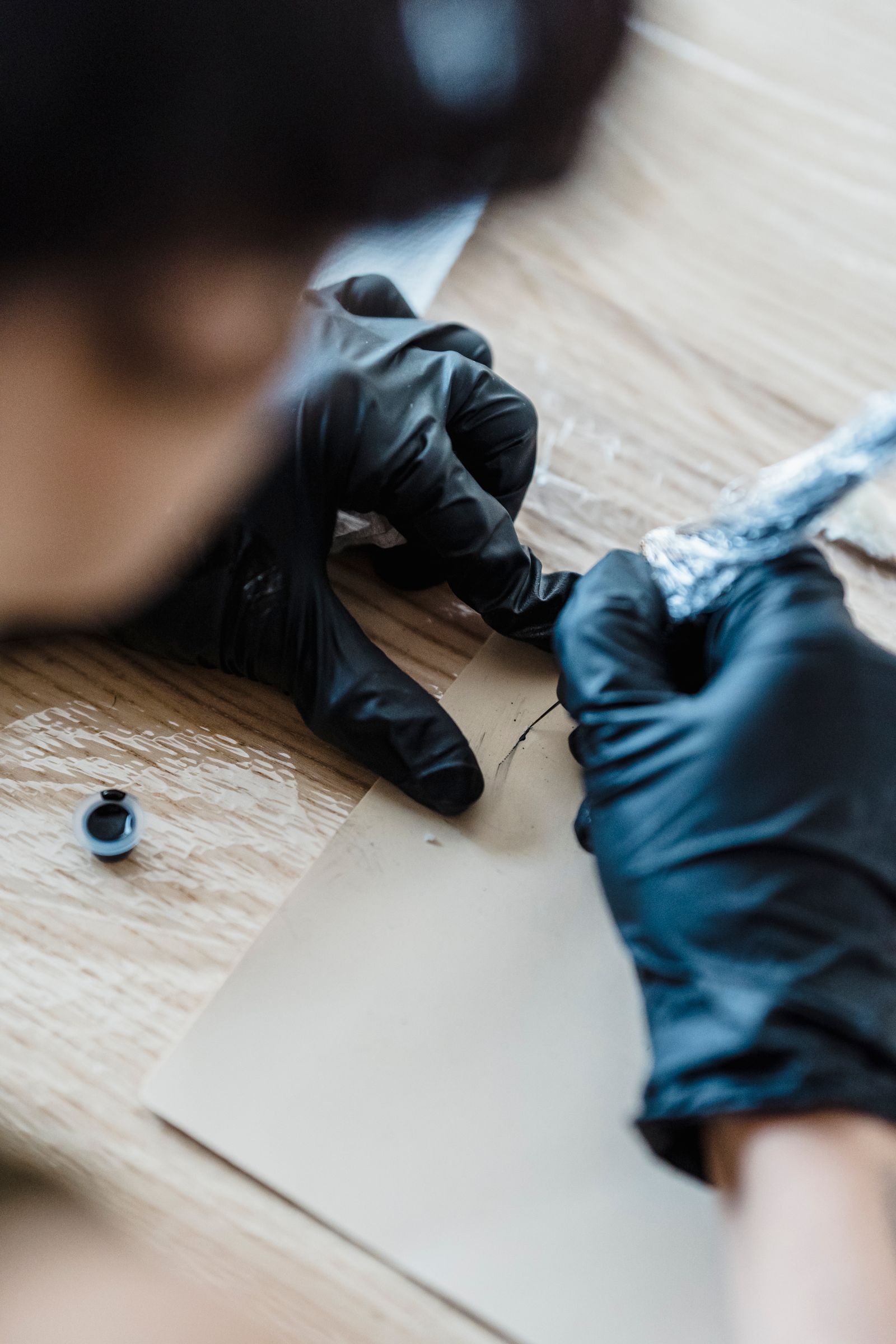
Reference photograph: gloved hands arranging small tools and supplies on a work surface. Knowing what each item does, and in what order it is used, is part of the foundation. See Cosmetic Tattoo Equipment: A Beginner’s Overview.
What students learn, structure and format
Skin
How skin types, texture and sensitivity affect pigment placement and how work heals.
Pigment
Colour theory for brows, lips and liner, undertones, and how pigment choice changes over time in the skin.
Hygiene
Setting up a clean workstation, handling single-use items and working with gloves throughout.
Mapping
Measuring and drawing symmetrical shapes that follow the client’s own features before any pigment is used.
Client consultation
Listening to what a client wants, setting realistic expectations and explaining aftercare clearly.
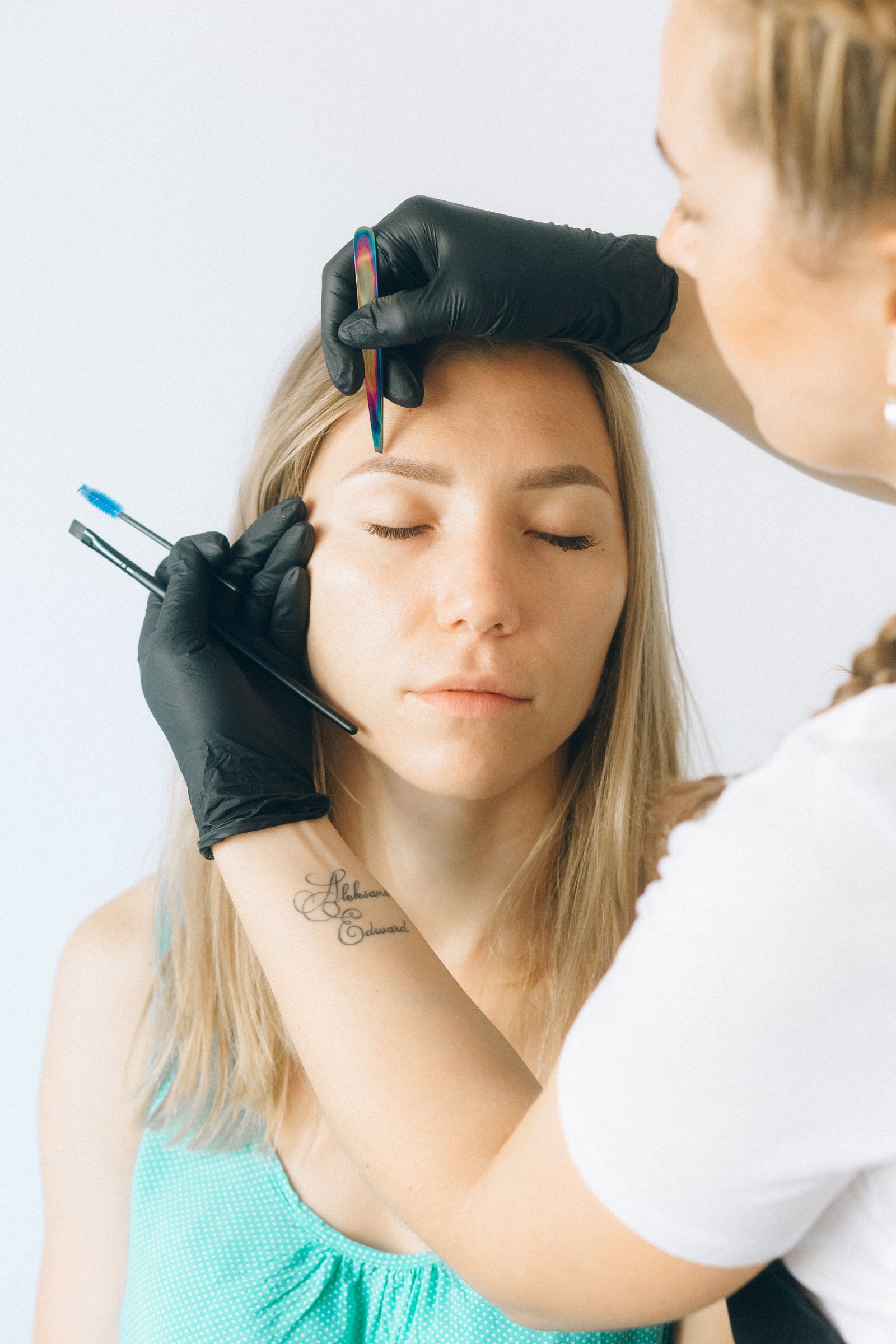
Reference photograph: a gloved technician working around a client’s eyebrow with a precision tool.
Course structure
Theory comes first: skin, pigment and hygiene. Then mapping and consultation, followed by an introduction to each technique.
Duration and training format
Confirmed on enquiry. Ask about the current format when you get in touch.
What is included
Course materials and inclusions are set out in full when you enquire.
Your trainer
Trainer profiles set out each trainer’s experience and areas of expertise, along with the courses they teach. Read them before you enquire so you know who will be guiding your first strokes.
Student work
The gallery shows genuine work by students, labelled by course, so you can see what learners go on to produce across brows, lips and eyes.
Questions
Do I need beauty experience before starting?
The course is designed as a starting point for the discipline. If you already work in beauty, mention it in your enquiry so the right path can be discussed.
Should I take this course or a specialist one?
If you want a broad grounding first, begin here. If you have already settled on a technique, compare the Microblading Course, Lip Tattoo Course and the other specialist courses on the courses page.
Where can I read more before enquiring?
Start with Cosmetic Tattoo Training: What to Expect, then browse the full course FAQ. Anything else can go through the contact page.